Your website is often the first interaction a potential customer has with your business. Before calling, booking an appointment, or making a purchase, people usually want to understand who you are, what you offer, and whether they can trust you.
A professional website can help establish credibility, attract qualified visitors, and turn interest into genuine business opportunities. However, achieving these results requires more than attractive graphics and a functioning homepage.
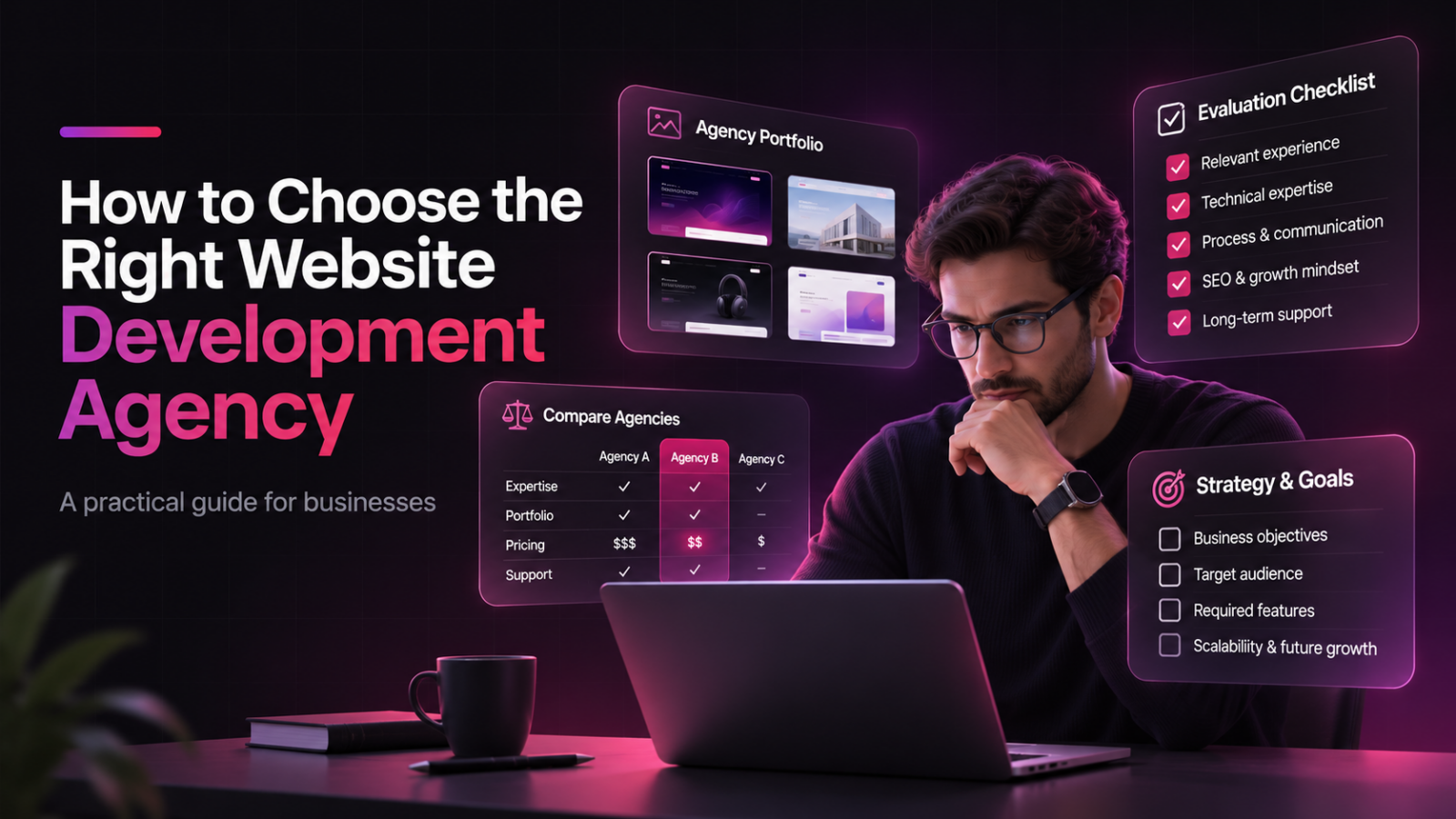
Choosing the right website development agency is one of the most important decisions you can make when building or improving your online presence.
With thousands of development companies offering similar services, identifying the right partner can become challenging. Some agencies specialize in visual design, others focus on software engineering, while others provide comprehensive digital solutions.
This guide explains what to look for, which questions to ask, and how to select a website development company that aligns with your business goals, technical requirements, and budget.
1. Understand Your Business Goals Before Hiring an Agency
Before contacting a website development agency, identify what you want your website to accomplish.
Different businesses require different website structures, functionality, and marketing strategies.
For example, a local plumbing company might need a website designed to generate phone calls and service inquiries. An ecommerce business needs product management, secure checkout functionality, and inventory integration.
A professional services company may prioritize appointment scheduling, lead generation, and credibility.
Start by identifying your primary objectives:
- Generate qualified leads and customer inquiries.
- Sell products or services online.
- Improve brand credibility and visibility.
- Automate customer interactions or internal processes.
- Replace an outdated website with a modern experience.
Clearly defined objectives help a development agency recommend appropriate technologies and avoid unnecessary features.
A capable agency should discuss your business goals before recommending a platform or development approach.
Explore the different possibilities through Sofverse website development services.
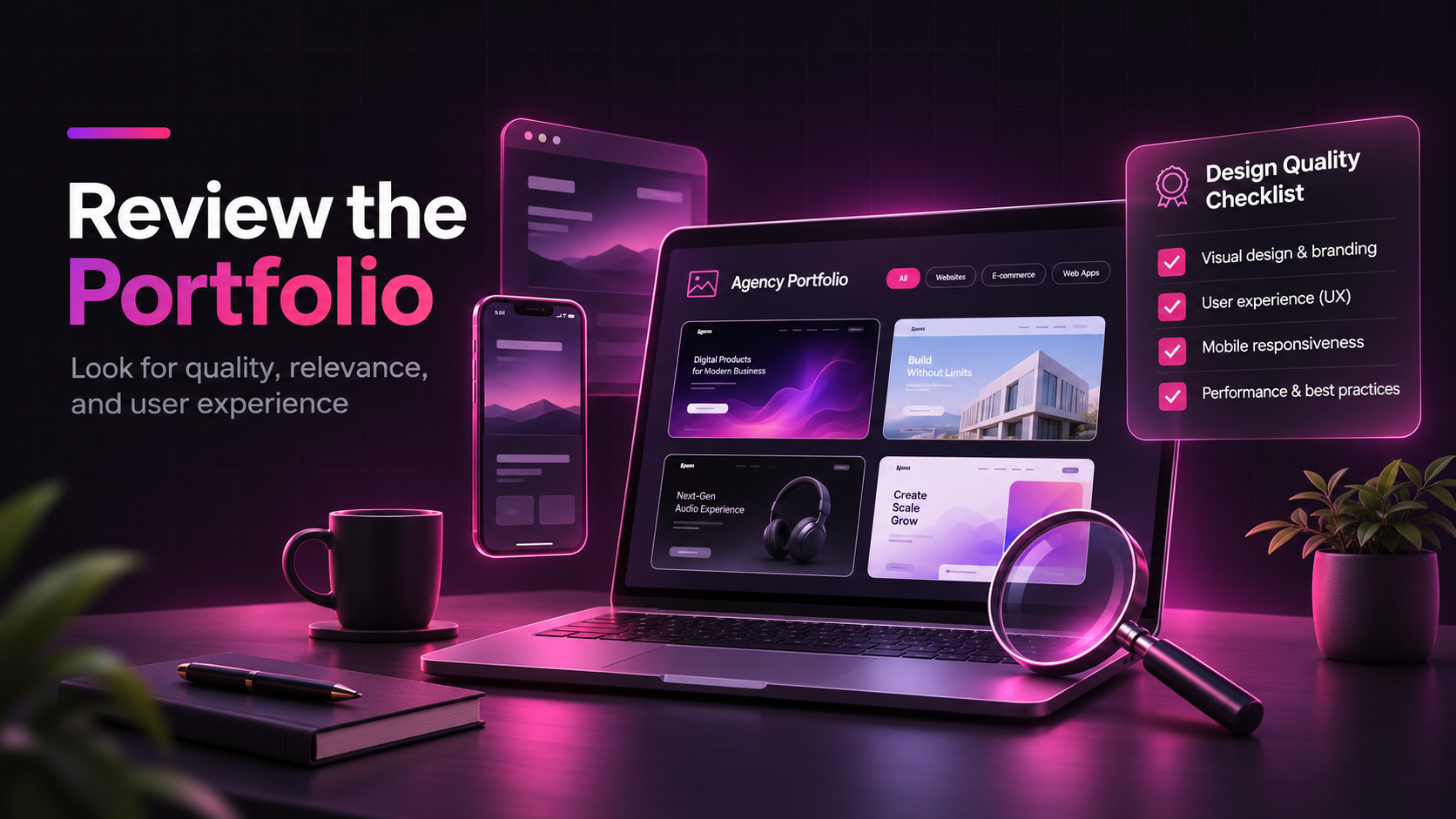
2. Examine the Agency’s Portfolio and Previous Projects
An agency’s portfolio provides valuable insight into its capabilities, design quality, and experience.
However, impressive screenshots alone do not demonstrate technical competence.
When reviewing previous projects, open the actual websites whenever possible.
Evaluate how quickly pages load, whether navigation feels intuitive, and how well the websites function on mobile devices.
Pay attention to the following factors:
Design consistency: Does the agency create professional designs that reflect each client’s individual brand?
Mobile responsiveness: Do the websites work correctly across smartphones, tablets, and desktop computers?
Functionality: Are contact forms, navigation menus, product filters, and other interactive elements operating properly?
Industry experience: Has the agency developed websites for businesses with requirements similar to yours?
An agency does not necessarily need experience in your exact industry. Strong research, adaptable design skills, and technical expertise can be equally valuable.
You can explore the Sofverse website development portfolio to see examples of website projects across different business categories.
3. Evaluate Technical Expertise and Development Capabilities
Not every website development company offers the same level of technical expertise.
Some agencies primarily work with website builders and predefined templates. Others specialize in custom development, complex applications, and integrated business systems.
Neither approach is automatically better. The correct choice depends on your requirements.
A straightforward business website may work perfectly well on WordPress. However, a company requiring customer portals, complex integrations, or specialized software functionality may benefit from custom development.
A technically capable agency should understand several essential development disciplines.
Frontend development determines how visitors interact with your website, including layouts, navigation, animations, and responsive interfaces.
Backend development manages databases, authentication, business logic, and server operations.
Full stack development combines both disciplines to deliver complete applications.
For businesses planning sophisticated platforms, full stack application development can provide greater flexibility over functionality and future expansion.
Ask potential agencies why they recommend a particular technology and how it will support your website as your business grows.
The right agency explains technical decisions in business terms rather than overwhelming you with unnecessary jargon.
4. Prioritize User Experience and Conversion Focused Design
A visually attractive website is valuable, but appearance should never come at the expense of usability.
Visitors should immediately understand what your business offers and what action they should take next.
Effective website design combines visual appeal with a clear user journey.
For example, a visitor looking for roofing services should quickly find service information, relevant project examples, and an accessible contact form.
If these elements are difficult to locate, potential customers may leave before making an inquiry.
Professional UI and UX design services focus on creating interfaces that are intuitive, accessible, and easy to navigate.
When evaluating an agency, ask how it approaches user research, navigation structure, mobile usability, and conversion optimization.
The goal should be a website that helps visitors make decisions, not simply one that looks impressive.
5. Make Sure SEO Is Part of the Development Process
A common mistake businesses make is treating search engine optimization as something to consider only after launching a website.
In reality, several important SEO decisions occur during development.
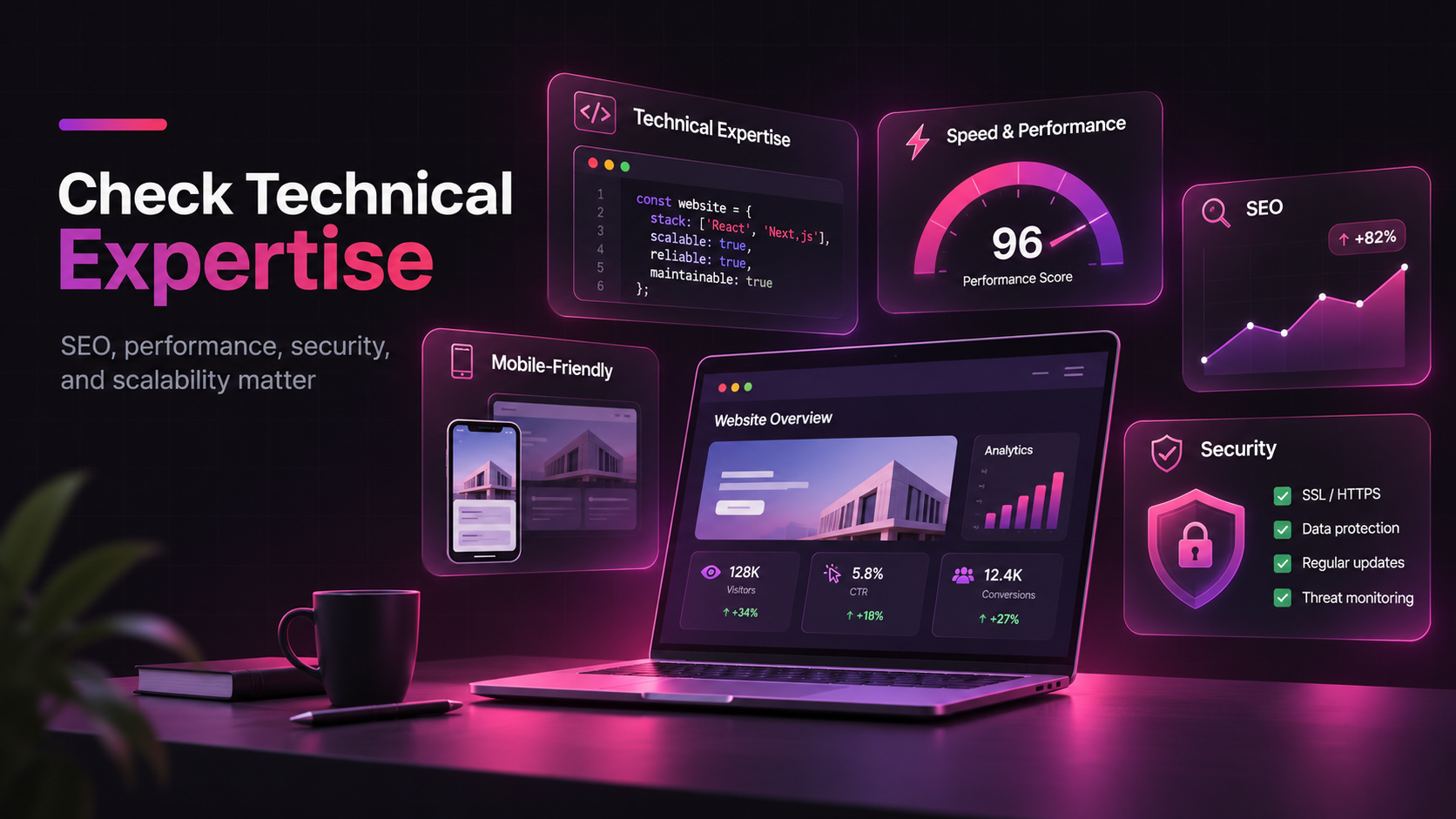
Website architecture, mobile usability, page performance, internal linking, and crawlability can all influence how effectively search engines discover and understand your content.
A website development agency should understand fundamental technical SEO principles.
These include:
- Logical website architecture and navigation.
- Descriptive URLs and appropriate heading structures.
- Mobile friendly layouts and responsive design.
- Optimized images and efficient page loading.
- XML sitemaps, canonical URLs, and proper indexing controls.
- Structured data where relevant.
A well developed website creates a stronger foundation for ongoing SEO campaigns.
However, technical optimization alone cannot guarantee search rankings. Content quality, relevance, competition, and other factors also influence search performance.
Businesses seeking sustainable organic visibility should consider combining development with a comprehensive SEO strategy.
6. Ask About Website Performance, Security, and Reliability
Website speed and security should be considered essential requirements rather than optional upgrades.
A slow website creates frustration, particularly for visitors using mobile connections.
Likewise, security weaknesses can expose customer information, interrupt operations, and damage trust.
When interviewing a website development company, ask how it handles performance optimization and security.
Important areas include efficient code, appropriate caching, image optimization, HTTPS configuration, software updates, access controls, and reliable backups.
If your website processes payments or stores sensitive customer information, additional safeguards may be necessary.
An experienced agency should also understand hosting environments and how infrastructure affects reliability.
For more complex projects, services involving website security and compliance can help address technical risks.
You should also ask whether the agency monitors website availability and performance after launch.
Ongoing performance monitoring can help identify problems before they significantly affect the customer experience.
7. Understand the Agency’s Development Process
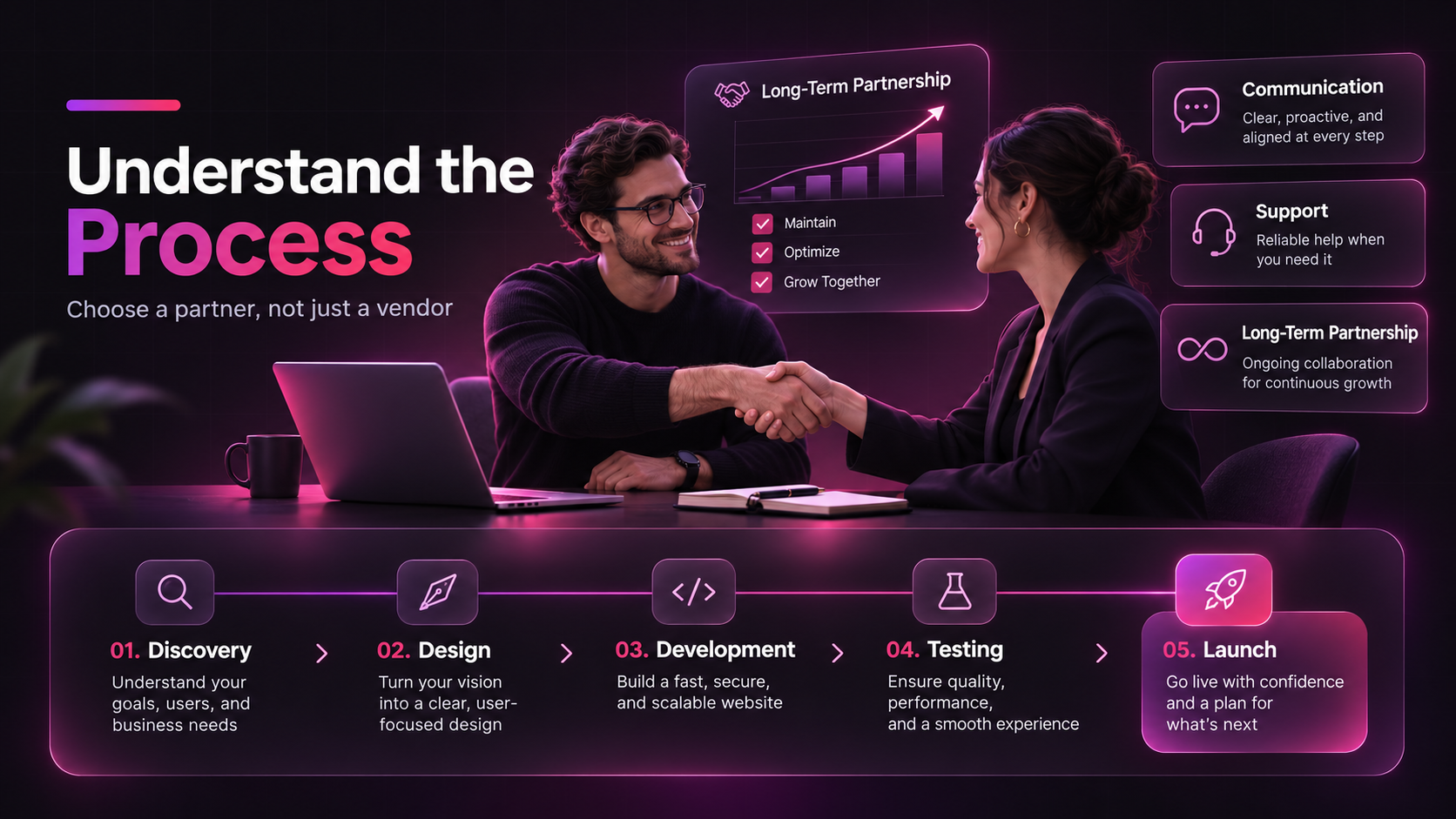
A reliable website development agency should have a clearly defined process.
Without structured planning, even relatively simple projects can experience delays, misunderstandings, and unexpected costs.
Although workflows vary between companies, a professional development process generally involves six stages.
Discovery: Understanding business objectives, target customers, competitors, and functional requirements.
Planning: Establishing website structure, content requirements, integrations, and project deliverables.
Design: Creating layouts, visual concepts, and user journeys for review.
Development: Building the approved designs and implementing required functionality.
Testing: Checking responsiveness, browser compatibility, forms, performance, and security.
Launch: Publishing the website, verifying essential functions, and providing access or documentation.
Ask whether you will be able to review progress and request revisions during development.
A transparent process helps both parties manage expectations and reduces the risk of expensive changes near completion.
8. Compare Pricing Based on Value, Not Just Cost
Website development pricing varies depending on complexity, customization, functionality, and the services included.
A basic informational website typically requires fewer development resources than a custom ecommerce platform or sophisticated business application.
However, choosing the cheapest proposal without examining its scope can become expensive later.
A low initial quote may exclude necessary features such as content migration, mobile optimization, integrations, or post launch assistance.
When comparing proposals, determine exactly what each agency includes.
Ask whether the quoted price covers design, development, mobile responsiveness, content population, testing, and deployment.
You should also understand any recurring charges for hosting, maintenance, software licenses, and third party services.
For example, a business may receive two very different quotes. One might cover only a template setup, while the other includes custom design, technical optimization, and additional integrations.
Comparing those prices without considering the deliverables would be misleading.
The best website development agency is not necessarily the most expensive or the cheapest. It is the one offering appropriate solutions, transparent pricing, and demonstrable value.
9. Confirm Website Ownership and Administrative Access
Website ownership is an important issue that businesses sometimes overlook.
Before signing an agreement, clarify who will control your website, domain registration, hosting account, content, and administrative credentials.
Your contract should explain the ownership and licensing terms for custom code, design assets, plugins, and other components.
Ask whether you can move the website to another hosting provider or work with a different developer in the future.
You should also understand whether your website uses proprietary systems that could make migration difficult.
Ideally, you should retain control over essential business assets and have the ability to manage your website without unnecessary dependence on a single provider.
Transparency around ownership protects your investment and gives you greater flexibility as your business evolves.
10. Consider Future Growth and Business Integrations
Your website requirements may change as your business expands.
Today, you might need a simple company website with a contact form. Tomorrow, you may require customer accounts, ecommerce functionality, appointment scheduling, or automated workflows.
Choosing an agency that understands scalable development can reduce the need for costly rebuilding.
Ask whether the proposed website can accommodate additional pages, new features, and integrations.
For example, connecting your website with a customer relationship management platform can simplify lead management.
Integrating appointment scheduling or automated notifications can reduce repetitive administrative tasks.
Businesses interested in connecting their existing software can explore custom integration systems.
The objective is not to purchase every possible feature immediately. Instead, choose a practical foundation that supports reasonable future expansion.
11. Review Communication and Ongoing Support
Technical skills are important, but communication often determines whether a website project runs smoothly.
A reliable development partner should explain timelines, provide regular updates, and respond clearly to questions.
Before committing, establish who will manage your project and how communication will take place.
Determine how feedback is handled and what happens if requirements change during development.
You should also clarify what support is available after the website launches.
Websites require occasional updates, performance checks, backups, and troubleshooting.
Some agencies provide maintenance packages, while others offer support separately.
Understanding these arrangements beforehand prevents confusion when assistance becomes necessary.
Warning Signs When Hiring a Website Development Company
Not every company advertising professional website development services will be a suitable partner.
Be cautious when an agency cannot provide relevant work examples or explain its development process.
Other warning signs include unclear contracts, vague deliverables, unrealistic deadlines, and unwillingness to discuss ownership.
Promises of guaranteed first position Google rankings should also be treated skeptically.
Similarly, an agency that recommends expensive features without understanding your business objectives may not be prioritizing your interests.
A trustworthy development partner should be comfortable discussing limitations, tradeoffs, and alternative solutions.
Questions to Ask Before Hiring a Website Development Agency
Before making your final decision, ask the agency these questions:
- Have you completed projects with requirements similar to ours?
- Which development platform would you recommend, and why?
- What deliverables are included in the project quotation?
- How will you address mobile responsiveness, performance, and SEO?
- Who will own the website, content, and administrative accounts?
- How many revisions are included during development?
- What testing procedures do you follow before launch?
- Will the website support additional functionality in the future?
- What maintenance and technical support options are available?
- How will we measure whether the website meets our business goals?
Clear and specific answers can reveal considerably more about an agency’s capabilities than an impressive sales presentation.
Why Businesses Consider Sofverse for Website Development
At Sofverse, website development is approached as part of a broader digital solution.
The company brings together development, interface design, SEO, automation, and technical infrastructure services to address different business requirements.
Depending on the project, this can involve developing a professional company website, creating a custom platform, or integrating existing business tools.
Businesses can review completed website projects and explore the available development services before discussing their requirements.
The objective is to identify a solution that supports the business rather than introduce unnecessary technical complexity.
Final Thoughts: Choose an Agency That Understands Your Business
Selecting the right website development agency requires more than comparing design samples and price quotations.
You need a partner that understands your goals, demonstrates technical competence, communicates clearly, and provides transparent project terms.
Prioritize relevant experience, website performance, user experience, SEO fundamentals, ownership, and future scalability.
A well planned website can become an important business asset that supports customer acquisition, brand credibility, and operational efficiency.
Planning a new website or considering a redesign?
Contact Sofverse to discuss your business requirements and explore the development approach that best suits your project.

sofverse
The Sofverse team designs, builds and scales websites, web applications, automation and growth systems for businesses across the United States.
More articles